In Paris, the international optics fair has become much more than a professional meeting: it is a true showcase where we discover the glasses of the future. Between technological innovations, bold design and medical advances, the biggest brands and startups unveil each year prototypes and collections that redefine the way we see and wear glasses.

From reimagined acetate frames to connected glasses integrating augmented reality, the 2025-2026 edition highlighted a future where optics and digital merge. But what did we really discover this year at Silmo? And above all, are we at the dawn of the end of traditional glasses as we know them?
Silmo Paris: more than a fair, a global showcase
It’s impossible to talk about the glasses of the future without mentioning Silmo Paris, the true international temple of optics. Each year, this essential event brings together more than 900 exhibitors, 1,500 brands from 42 countries, and attracts over 33,000 visitors.
The importance of this show is not limited to the presentation of new frames or technological prototypes. Silmo is a place where the optics of tomorrow are imagined, built and deployed. It is where upcoming trends, emerging talents, exclusive collections and the excellence of know-how are revealed.
On the program: debates, conferences and immersive experiences. The Tech Village highlights disruptive technologies, the Trends Forum unveils new shapes, colors and inspirations, and the Good Eye on the Planet space emphasizes CSR initiatives. With the participation of giants like Google, Meta and Snapchat, Silmo positions itself as a living laboratory where creativity and innovation shape the future of vision.
What’s new for 2025-2026?
Smarter connected glasses
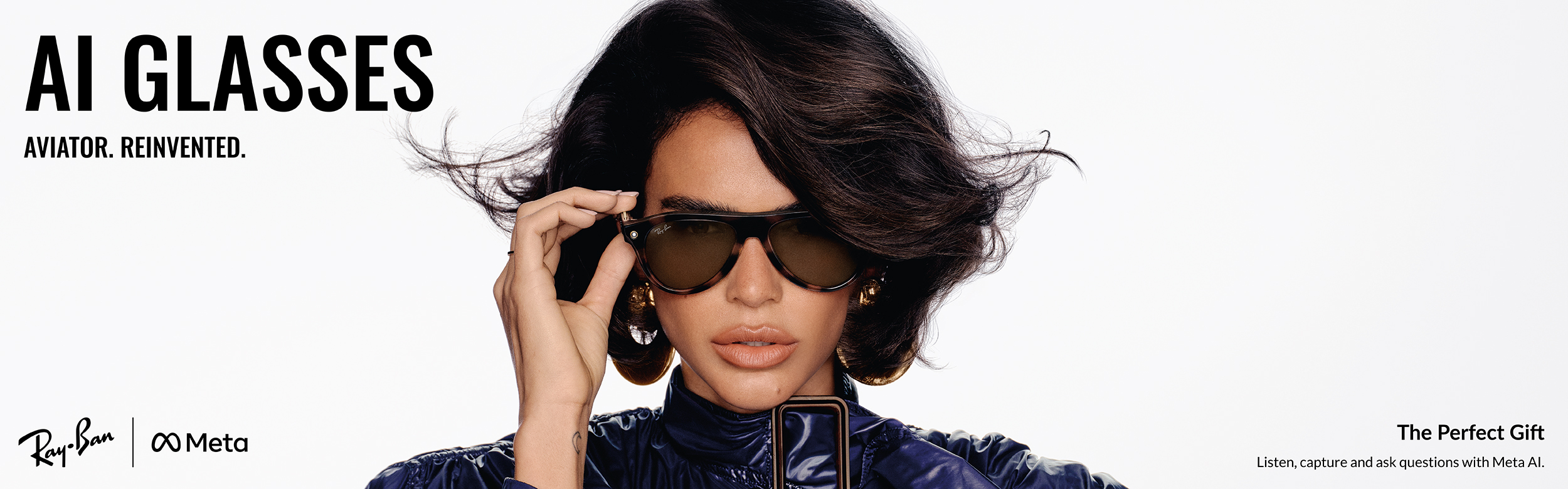
In 2025-2026, connected glasses are taking a new leap forward. Some pairs now offer instant translation, projected directly into the field of vision thanks to augmented lenses. Other models, equipped with integrated sensors, provide fall detection – a major safety asset for seniors or vulnerable users. These smart frames connect via Bluetooth to smartphones and open the way to discreet health monitoring. Silmo shows that smart eyewear is no longer just a gadget but a concrete tool to improve daily life.
The Chamelo model and chameleon lenses
Among the most striking products, the Chamelo model captured visitors’ attention. Its new-generation chameleon lenses, faster and more precise than traditional photochromic lenses, change tint within seconds depending on ambient light. Outdoors, they become true polarized sunglasses lenses to reduce glare, while indoors, they return to complete transparency to preserve optimal visual comfort. This innovation blurs the line between prescription glasses and sunglasses, offering a unique solution for those who want a single pair adapted to all situations.
More sustainable and customized frames
Frames are also evolving. The focus is on lightweight and durable materials such as titanium or recycled acetate, but also on innovative processes such as bio-sourced 3D printing. Some brands, like Manti Manti, even offer fully customizable children’s frames designed to adapt perfectly to each morphology. Opticians are now emphasizing not only design but also sustainability, with a wide choice of eco-responsible frames.
Next-generation corrective lenses
Lens makers are also innovating. Progressive lenses are becoming more precise, with ultra-fine centering measurements enabling an expanded field of vision. Anti-reflective and anti-scratch coatings are improving, while blue light protection is now almost standard to preserve the retina against screens. Thinner lenses are also being offered for aesthetics, even in cases of strong correction (myopia, hyperopia, astigmatism). Some prototypes go further, integrating electronically controlled adaptive filters capable of adjusting the tint according to the visual environment.
The brands that stood out this year
This year, several players distinguished themselves through their innovations.
-
EssilorLuxottica won the prestigious SMILO d’Or Smart Eyewear award with its Nuance Audio project. This pair of smart glasses integrates a discreet listening assistant, designed to improve the lives of people with hearing loss. A breakthrough illustrating the convergence of health, visual comfort and connected technology.

-
QED Eyewear was recognized for its patented, reversible attachment system – glue-free, washer-free, reusable and durable. A technical innovation praised for its simplicity and efficiency.
-
Frezz BleeqUp (Pacific Group) impressed with a sports eyewear integrating a 4-in-1 camera, directional audio system and microphones filtering wind noise – a technological gem for connected athletes.
-
Oakley Meta, a collaboration between Oakley and Meta, established itself as a Smart Eyewear reference, combining sports usage with artificial intelligence.
-
GOODVISION and Ørgreen Optics were also noted for their innovative proposals in augmented optics and advanced materials.
-
Finally, in terms of design and sustainability, TAG Heuer and Manti Manti (bio-sourced 3D printed kids’ frames) proved that creativity and responsibility can go hand in hand.

Is it really the end of glasses as we know them?
Traditional glasses still have a future
Even though connected models fascinate, classic prescription glasses remain essential to correct visual defects such as myopia, hyperopia, astigmatism or presbyopia. Nothing replaces a well-fitted pair of glasses, with double-focus or perfectly centered progressive lenses. Opticians and ophthalmologists remind us that medical prescription and precise fitting remain a priority.
Treatments (anti-scratch, anti-reflective, polarized, sun lenses) are already significant innovations in themselves. For many, “my glasses” remain a custom-made pair: pleasant to wear, light and discreet, with a coherent style (round, oval, rectangular, cat-eye, wayfarer) and real visual comfort.
The complementarity between glasses and technology
Rather than opposing, solutions are added together. Depending on the moment, one can:
-
use a pair of progressive glasses for work,
-
switch to polarized sports sunglasses outdoors,
-
or wear smart connected glasses for leisure or professional needs.
The market is becoming hybrid. Traditional glasses dominate for correction and aesthetics, while connected eyewear enriches specific uses.
The importance of comfort, style and price
Adoption will depend on comfort, style and price. Wearers want lightweight, aesthetic models, designed for long wear, and compatible with health insurance or mutual coverage. The role of the optician is central: eye exam, precise measurements, choice of lens tint (tinted, photochromic, polarized), advice based on morphology and frame type. Virtual or in-store try-on helps confirm the most suitable glasses model for each lifestyle.
Choosing the glasses of the future: what Silmo 2025 teaches us
Silmo 2025 is not just about spectacular prototypes: it already guides the choices wearers will make in the coming years. This show reveals that tomorrow, choosing glasses will no longer be limited to corrective lenses or frame style, but will also involve new criteria related to connectivity, sustainability and visual experience.
On one hand, visitors discovered models like Nuance Audio, proving that glasses can become a global health tool, combining visual correction and hearing assistance. On the other, innovations like Chamelo redefine the boundary between prescription glasses and sunglasses, simplifying life for those who wear one pair all day long. Finally, eco-responsible frames in recycled acetate or lightweight titanium demonstrate that the future also depends on environmentally conscious choices, without sacrificing aesthetics or visual comfort.
In short, choosing glasses after Silmo 2025 is no longer just about medical prescription – it’s about lifestyle: do we want glasses that only correct, or glasses that connect, protect and accompany us?

What future for the glasses of tomorrow?
The glasses of the future are no longer a fantasy – they already exist. From EssilorLuxottica’s Nuance Audio to Chamelo’s chameleon lenses, through connected sports eyewear, augmented reality or CSR innovations, each new product confirms that optics is entering a new era.
But this future does not erase the past: traditional glasses remain essential to correct visual defects, protect the retina and support the daily lives of millions of wearers.
Rather than talking about an end, we should talk about evolution: tomorrow, everyone will be able to own a collection of glasses adapted to their lifestyle – from elegant frames to high-performance sunglasses and smart models.
Whether you’re looking to change glasses, discover a new trendy pair or explore optical innovations, Silmo reminds us: glasses are more than just equipment, they are a bridge between the real world and the augmented world.